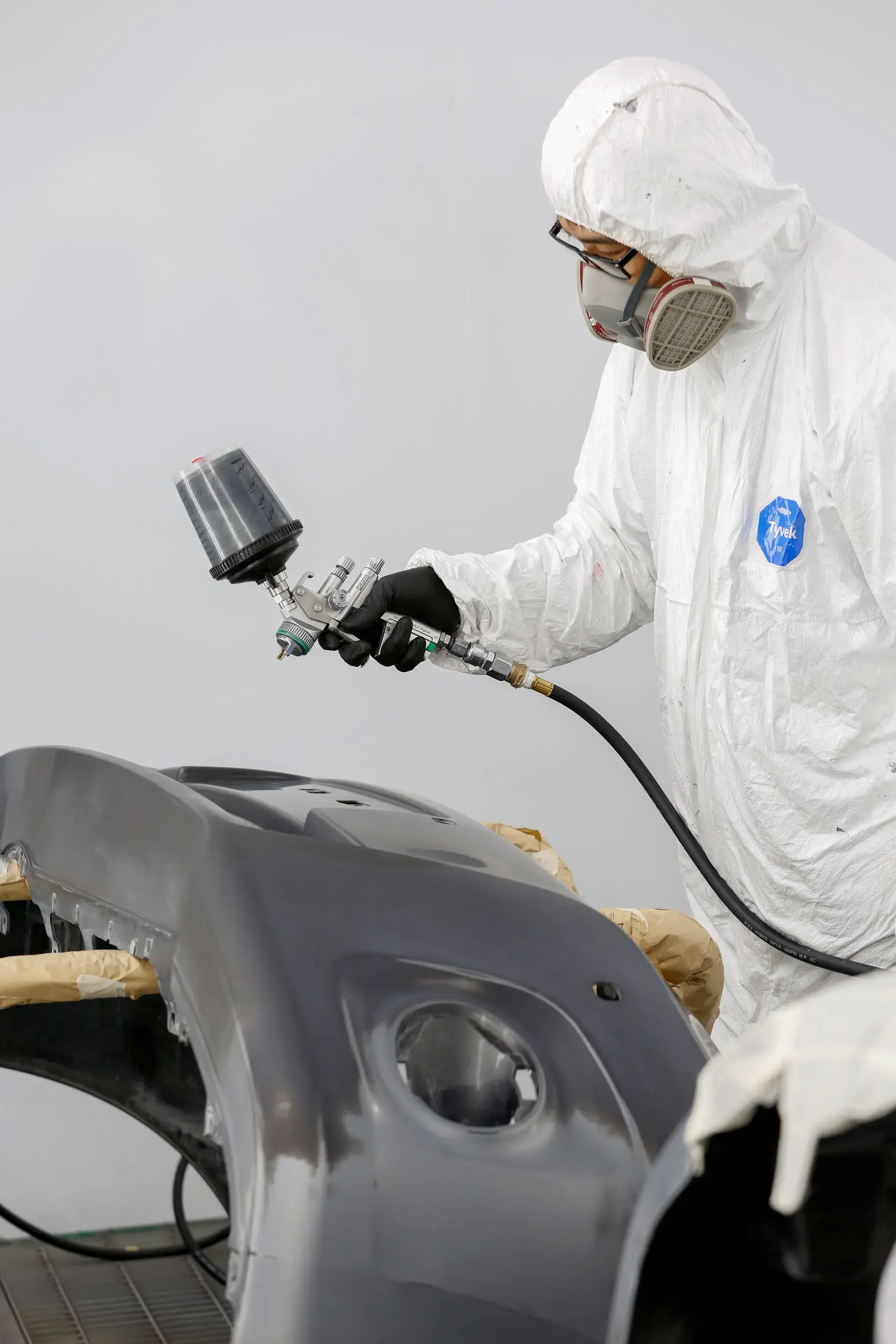
Paint spray booths combine three ingredients that make fire protection design unusually specific: an atomised, flammable coating in the air, a directional airflow path designed to carry overspray to a filter bank, and — in automotive and industrial finishing lines — a production schedule where downtime is expensive. NFPA 33 is the standard written specifically for this combination.
What NFPA 33 governs
NFPA 33, Standard for Spray Application Using Flammable or Combustible Materials, sets requirements for booth construction, ventilation interlocks, electrical classification, and the permitted methods of fire suppression inside the booth and its associated ductwork and filter plenum. It does not mandate a single suppression technology — automatic sprinklers, foam-water systems, and water mist systems meeting NFPA 750 are all recognised options, each with different trade-offs for a working paint shop.
Why water mist fits the booth risk profile
A booth fire scenario typically starts either as a solvent-laden air ignition or as ignition of the combustible overspray film that accumulates on booth walls, ductwork and filters over time — and the booth's own ventilation airflow can carry flame toward the filter bank and exhaust plenum within seconds. Water mist's fine droplet spectrum gives fast cooling and flame knockdown in this scenario, while displacing a fraction of the water volume a conventional deluge or foam-water system would use.
That water-volume difference is not just an environmental nicety — it is a production-uptime argument. A deluge or foam discharge into a booth typically means days of cleanup, contaminated overspray filters, and corrosion exposure for booth electronics, sensors, and robotics. A water mist discharge uses far less water, evaporates faster, and lets a paint line return to service sooner.
Designing to NFPA 33 and NFPA 750 together
Mistelix booth systems are engineered against both standards as one integrated design, not two separate compliance exercises: the booth's ventilation interlock, flame/heat detection, and mist nozzle grid are coordinated so that a fire trigger simultaneously stops airflow (containing the fire) and initiates suppression across the spray zone and filter bank. See our Paint Booths application page for the nozzle layout and detection approach.
What a booth tender should specify
Booth dimensions, airflow direction (downdraft, side-draft, or cross-draft), filter bank location, and line takt time are the inputs a system designer needs to size nozzle count, pump capacity, and detection zoning correctly for your production line.