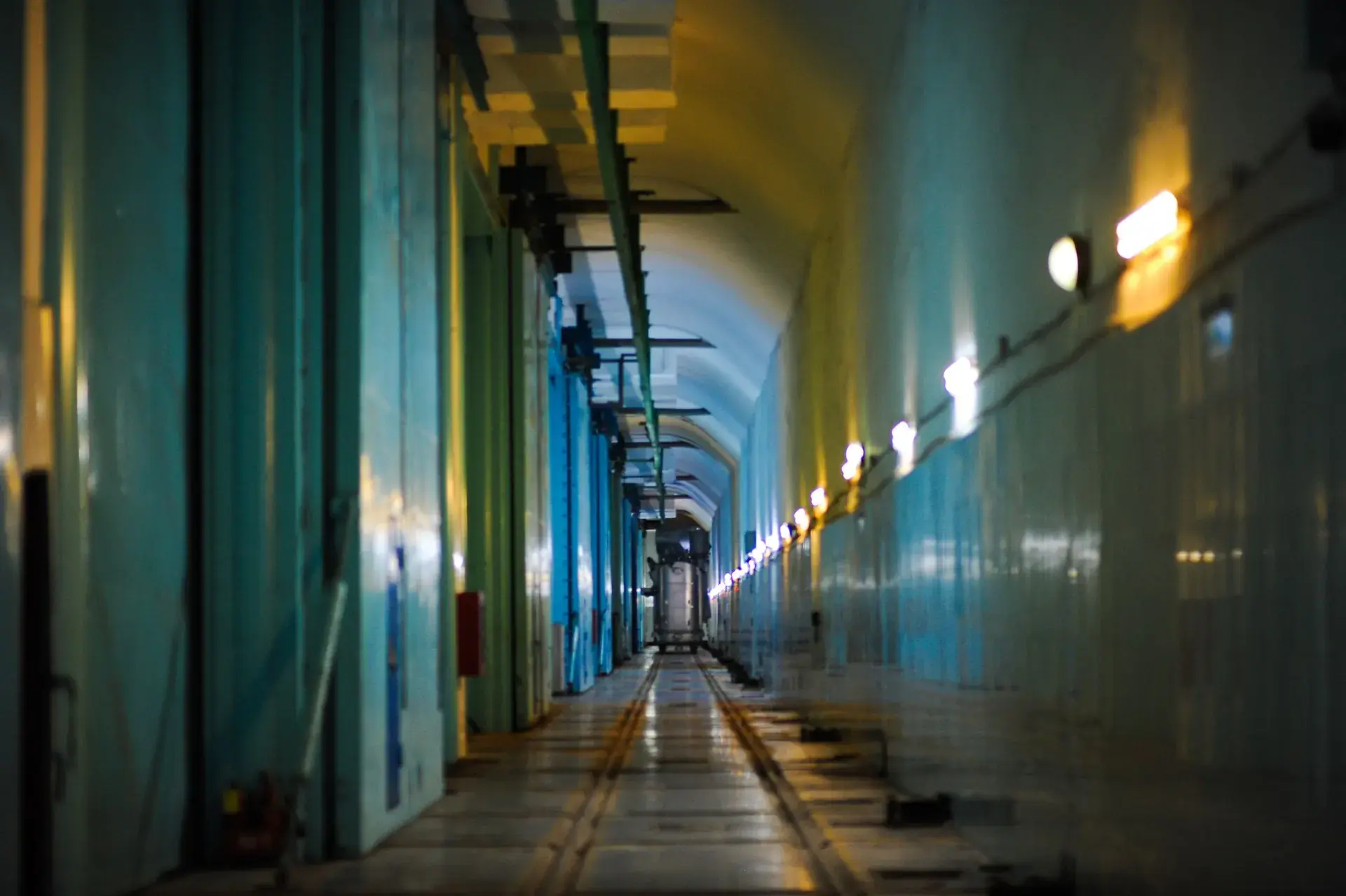
Applications · Cable tunnels
Cable Tunnel Fire Protection
Metro and power utility cable galleries carry the infrastructure a city depends on through long, confined, largely unmanned runs. A cable fire in one of these tunnels is a slow-burning, high-value risk: cable insulation sustains fire for extended periods, smoke travels the length of the gallery, and any outage cascades to every system the cables serve.
Risk
Why cable fires behave differently
Unlike a vehicle fire, a cable fire is fuel-rich and self-sustaining along the length of a tray, and cable tunnels are frequently unmanned between inspections — detection and automatic suppression have to do the entire job before anyone arrives.
The fuel is also continuous, which is the part that catches people out. A vehicle fire has a fuel load that is large but bounded; a loaded cable tray is a fuel path running the full length of the gallery, and flame can propagate along bunched cables well beyond the point of ignition. Add a confined cross-section that holds heat and smoke, and restricted access that delays any manual intervention, and the case for automatic suppression stops being a question of asset value alone. Read the details in Cable Tunnel Fire Protection in India.
Standards basis
Where EN 14972-11 fits
The EN 14972 series sets out how water mist systems are tested, with separate parts for separate risks. Part 11 is the protocol written for cable tunnels: it defines the fire scenarios and the pass criteria a system is judged against for this application, which is what makes it the document a specifier should be citing rather than a general water mist reference.
Mistelix cable tunnel systems are designed to that protocol. Mistelix holds no EN 14972 test certificate today, and we say so rather than implying evidence we do not hold — our EN 14972 roadmap sets out what exists today and what does not. If your specification requires a tested system by a fixed commissioning date, that is a conversation to have before the design is fixed, not at handover.
Detection and zoning
Finding the fire, then opening the right zone
As in road and rail tunnels, cable galleries are divided into protection zones with section valves, so a fire on one cable run triggers suppression only in its own zone — limiting both water use and the outage footprint from the incident itself.
Zoning only works if detection can say where the fire is. In a long gallery that normally means linear heat detection following the tray route, because it reports position as well as alarm — a detector that tells the panel there is a fire, but not which zone, cannot drive a zoned system and forces the design back toward discharging everywhere. Detection, zoning and suppression are therefore specified as one scheme rather than three packages, and the zone boundaries are set with the gallery’s own access points and fire barriers rather than at arbitrary intervals.
Why it matters
The uptime argument
For metro operators and power utilities, the cost of a cable tunnel fire is measured less in the tunnel structure and more in the service outage it causes. High-pressure water mist protects the asset without adding a secondary flooding risk to adjacent cable runs and equipment rooms — keeping unaffected sections of the network in service.
That second point deserves weight, because it is the usual objection to any water-based system in a cable environment. The question is not whether water and cables mix, but how much water arrives and where. A mist system delivers its cooling effect with a fraction of the volume a deluge system needs, and zoning keeps the rest of the gallery dry, so the exposure to healthy circuits is bounded by design rather than accepted as the price of suppression.
FAQ
Common questions
- What standard covers water mist in cable tunnels?
- Within the EN 14972 series, Part 11 is the test protocol written for cable tunnels, and it defines the fire scenarios and pass criteria a water mist system is evaluated against for this risk. Mistelix systems are designed to that protocol, and Mistelix holds no EN 14972 test certificate today. We publish that position openly rather than implying test evidence we do not yet hold.
- How is a fire detected in a cable tunnel?
- Cable galleries are long, confined and usually unmanned between inspections, so detection has to both find the fire and locate it along the run. Linear heat detection along the tray route is the common answer because it reports position as well as alarm, which is what lets suppression open the right zone instead of the whole gallery. Detection, zoning and suppression are specified as one scheme — a detector that alarms without locating cannot drive a zoned system.
- Why zone a cable gallery instead of protecting the whole length?
- A cable fire is fuel-rich and self-sustaining along a tray, but it is still local when it starts. Dividing the gallery into zones with section valves means suppression goes where the fire is, which keeps both water demand and the outage footprint proportional to the incident. Protecting the full length on every activation would size the water supply for a scenario that is not the one occurring.
- Does discharging water mist risk damaging healthy cable runs?
- This is the objection worth taking seriously, and it is the reason water volume matters here as much as suppression performance. High-pressure water mist delivers its cooling effect with a small fraction of the water a deluge system needs, so the secondary flooding exposure to adjacent cable runs and equipment rooms is correspondingly smaller. Zoning limits it further, by keeping unaffected sections of the network dry and in service.
Next step
Request a cable tunnel system concept
Send us the gallery length, cable loading, and access constraints for your site.
Request technical assessment