Technology
How High-Pressure Water Mist Suppresses Fire
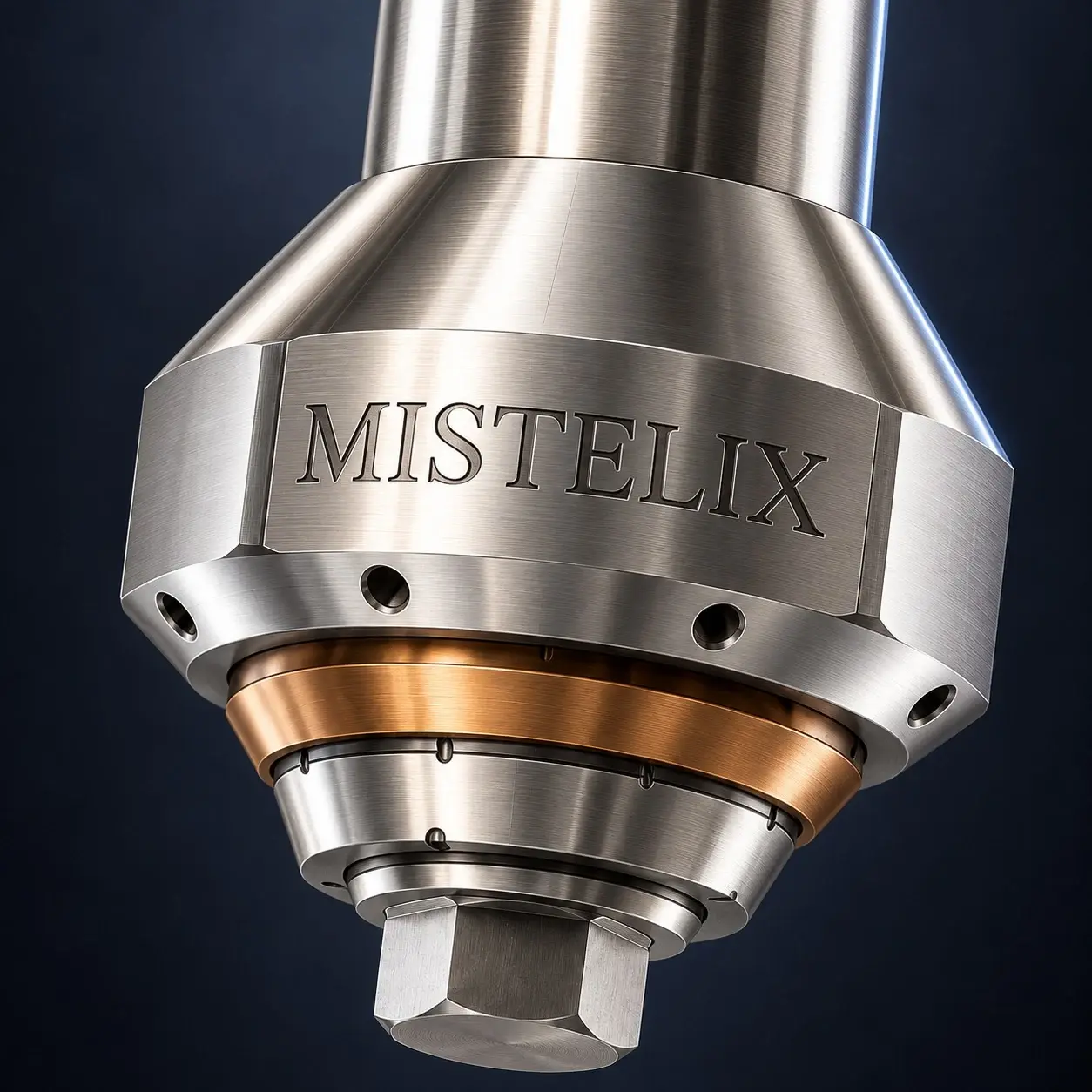
Water mist does not work like a sprinkler with smaller holes. At 50–140 bar, a nozzle shatters water into a cloud of droplets under 200 microns — fine enough to behave like a gas for heat transfer purposes, while still carrying water’s full cooling capacity. Three mechanisms act together in every discharge. New to the subject? The water mist fire protection guide covers the definition, the pressure classes and how each market approves it.
Mechanism 1
Cooling
Fine droplets present enormously more surface area per litre than a coarse sprinkler spray, so they absorb heat and flash to vapour far faster. That vapour transition removes energy from the fire plume at a rate coarse droplets cannot match.
Mechanism 2
Local oxygen displacement
As droplets flash to vapour near the seat of the fire they expand roughly 1,700 times in volume, and that expanding steam displaces oxygen in the local zone — starving combustion without flooding the wider space the way a total-flood gaseous system would.
Mechanism 3
Radiant heat attenuation
The droplet cloud itself blocks radiant heat transfer between the fire and surrounding fuel, slowing fire spread and protecting escape routes, structural elements and adjacent equipment even before the fire is fully extinguished.
Specification
System specifications
| Operating pressure | 50–140 bar (≈725–2,030 psi) |
|---|---|
| Droplet size (Dv0.9) | < 200 µm |
| Tunnel zone length | 25–30 m (≈82–98 ft) |
| Distribution pipework | SS 316 stainless steel |
| Activation | Zoned deluge — open nozzles, section valves |
Comparison
High pressure vs low pressure vs sprinkler
| Criterion | High-pressure mist | Low-pressure mist | Sprinkler |
|---|---|---|---|
| Droplet size (Dv0.9) | < 200 µm | 300–1,000 µm | ≈ 1,000–5,000 µm |
| Water demand | A fraction of sprinkler demand | Lower than sprinkler, above HP mist | Baseline — high |
| Heat absorption per litre | Highest — far more droplet surface per litre | Moderate | Lowest |
| Pipe diameter | Small-bore stainless tubing — light, retrofit-friendly | Medium bore | Large bore |
| Collateral water damage | Minimal — assets and electronics survive discharge | Moderate | Severe — flooding typical |
| Tank and pump footprint | Compact | Larger tanks | Largest tanks and mains |
Why it matters
Non-conductive, people-safe, water-efficient
Water mist is electrically non-conductive at the point of discharge, safe for occupied spaces, and — because it uses a fraction of the water a sprinkler or deluge system demands — dramatically reduces the size of the tank, pump and pipework a project must accommodate.
Physics
Why droplet size decides everything
All three mechanisms above depend on one property: how much droplet surface the system puts in contact with the fire per litre of water delivered. Halving a droplet’s diameter roughly doubles the surface area that same volume of water presents, and surface area is what governs how fast heat is absorbed and how quickly water flashes to vapour.
That is the whole argument for operating pressure. A sprinkler droplet measured in millimetres carries most of its mass straight past the flame to the floor; a sub-200-micron droplet evaporates in the hot gas layer where the heat actually is. The practical consequence is that a high-pressure system achieves comparable control with far less water — which is what makes the smaller tanks, smaller pumps and small-bore pipework possible downstream.
In practice
What separates a working system from a specification
Droplet size is necessary but not sufficient. Fine droplets carry little momentum, so a system has to deliver them where the fire is rather than merely produce them — which makes nozzle placement, spacing limits, obstruction rules and discharge duration as decisive as the spectrum itself. Two systems quoting identical droplet figures can perform quite differently.
This is why water mist is a performance-based technology rather than a prescriptive one. There is no universal spacing table: the design rules for a given system come from what that system demonstrated in full-scale fire testing, recorded in its DIOM manual. When you evaluate a supplier, the question is not what pressure they quote but which fire test their spacing rules came from — our standards ledger states where we stand on that.
FAQ
Common questions
- How does water mist actually put out a fire?
- Through three mechanisms working together rather than one. Fine droplets flash to vapour and absorb heat far faster per litre than a coarse spray; that vapour expansion displaces oxygen locally at the seat of the fire; and the droplet cloud itself attenuates radiant heat, slowing spread to adjacent fuel. Which mechanism dominates depends on the risk, which is why system design is application-specific rather than generic.
- Why does operating pressure matter so much?
- Because pressure sets droplet size, and droplet size sets cooling surface area per litre of water. High-pressure systems run at 50–140 bar and produce droplets under 200 microns; a low-pressure system below about 12 bar produces a much coarser spray. The finer the droplet spectrum, the more heat a given volume of water can absorb, which is why the pressure class largely determines what a system is capable of.
- Is water mist safe to use around live electrical equipment?
- Fine water mist is widely applied to electrical and electronics risks because the discharge is a fog of discrete droplets rather than a continuous conductive stream, and total water volumes are low. The exact equipment classes and clearances a given system covers are defined by its application-specific fire testing, not by the technology in general — ask for the test report that names your risk.
- Does water mist damage the protected space?
- Far less than the alternatives, which is usually why it is selected. A high-pressure system delivers its effect with a fraction of the water an equivalent sprinkler or deluge design requires, and the fine droplets largely evaporate rather than pooling. That means less standing water, less corrosion exposure for electronics and machinery, and a shorter return to service after a discharge.
Next step
Talk to us about your project
Send us the application, the governing standard and any drawings you have. An engineer responds with a system concept and hydraulic basis — not a sales pitch.
Request system concept