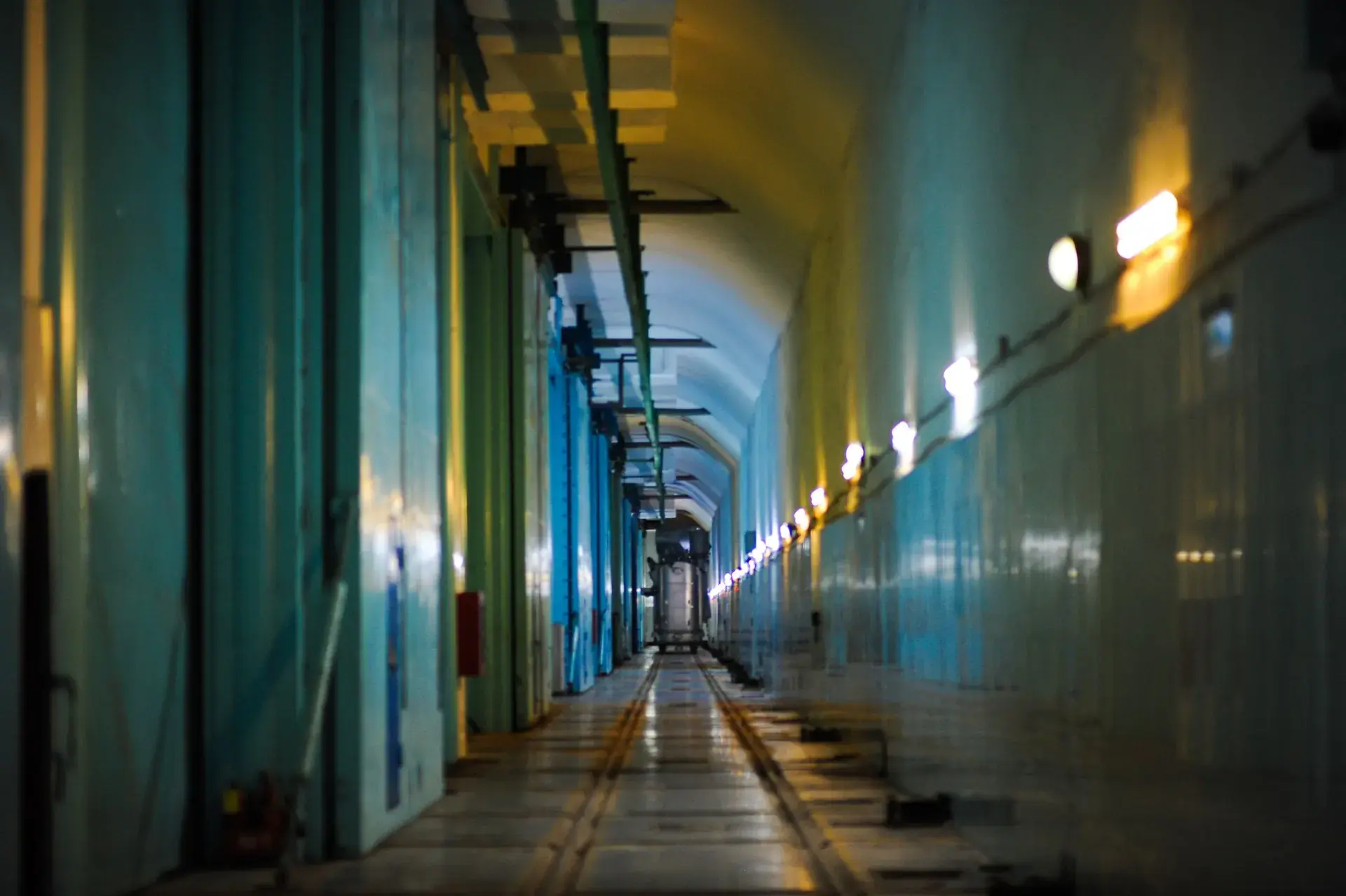
Metro rail systems and power utilities route enormous lengths of cable through dedicated tunnels and galleries — signalling cable, traction power cable, and high-voltage transmission cable, often bundled together over runs of hundreds of metres. These spaces are usually unmanned between inspections, and a cable fire behaves very differently from a vehicle or equipment fire.
Why cable fires are a distinct risk
Cable insulation is a self-sustaining fuel source: once ignited, a cable fire can propagate along a tray for a considerable distance, releasing dense smoke as it goes, well before anyone notices. Because cable tunnels are frequently unmanned, there is often no one present to call for help — detection and automatic suppression have to complete the entire job of controlling the fire before an external response can arrive at all.
Consequences beyond the tunnel itself
The direct cost of a cable tunnel fire is rarely the tunnel structure — it is the outage that follows. A metro signalling cable fire can suspend train service across an entire line; a power utility cable fire can black out the substations and consumers that cable feeds. This is why cable tunnel protection is evaluated as much on service continuity as on life safety.
Zoned water mist design for cable galleries
Mistelix designs cable tunnel protection the same way we design road and rail tunnel systems: the gallery is divided into protection zones, each with independent detection and a section valve, so that a fire on one cable run triggers suppression only in its own zone. This limits both the water used and — just as important for an operator — the outage footprint, since unaffected sections of cable and equipment room stay dry and in service.
High-pressure water mist is particularly well suited here because its low water demand avoids introducing a secondary flooding risk to adjacent cable runs, switchgear, and equipment rooms that a deluge system's water volume can create.
For the full zoned system design — section-valve spacing, water budget and the NFPA 502 / EN 14972 basis — see tunnel fixed firefighting systems.
What to specify
A cable tunnel or gallery protection tender should specify the gallery length, cable loading and type (signalling, traction, or high-voltage transmission), and access constraints for maintenance and firefighting. See our Cable Tunnels application page for the design approach, or read Water Mist vs Deluge in Tunnels for the underlying technology comparison.