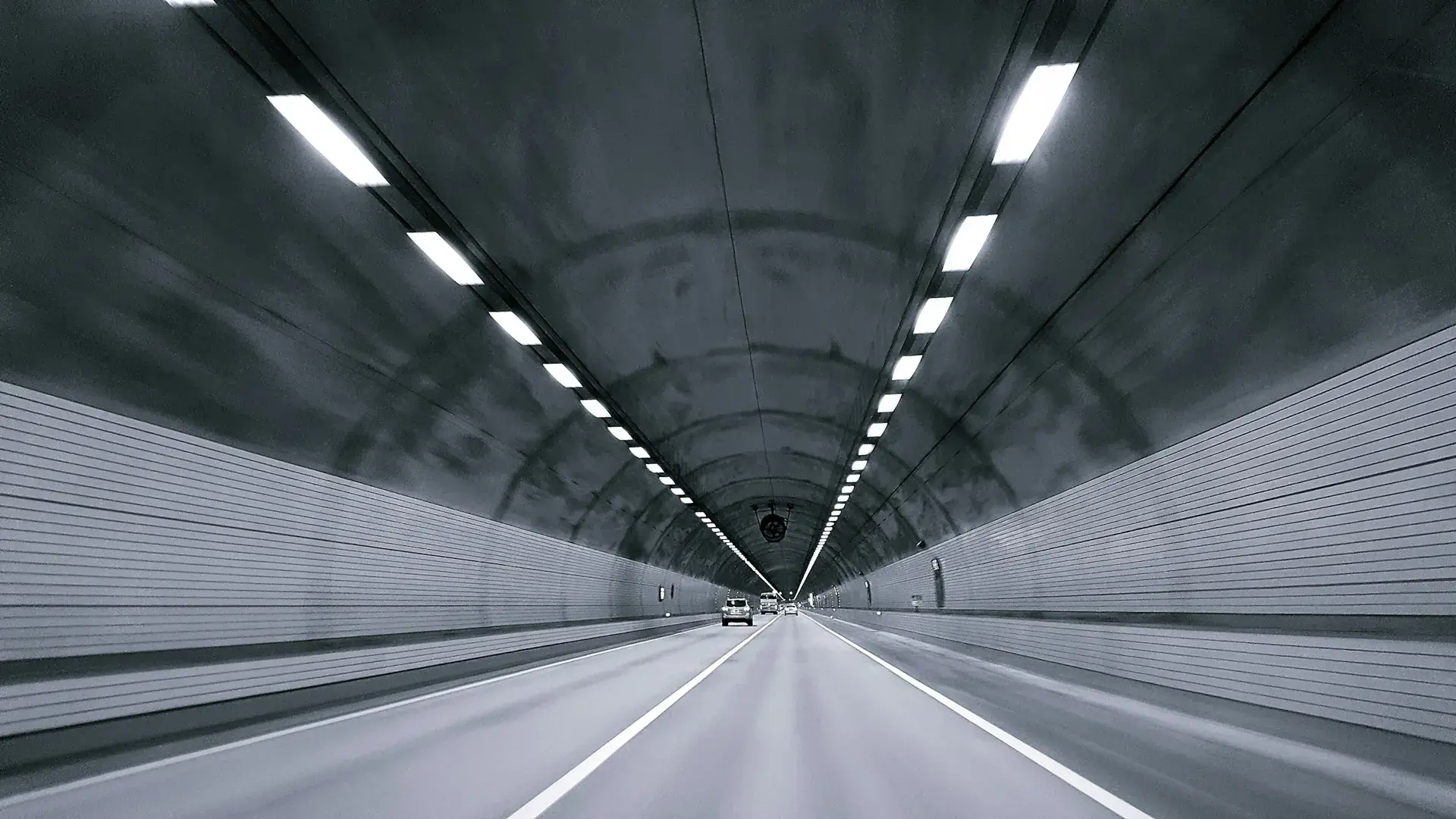
NFPA 130, Standard for Fixed Guideway Transit and Passenger Rail Systems, is NFPA's fire protection and life-safety standard for metro, subway and passenger rail systems (NFPA 130 product page). It is the rail counterpart to NFPA 502, which covers road tunnels, and the current edition is the 2026 edition. This article covers what NFPA 130 asks of a rail or metro tunnel, what it does not, and where a water mist system fits.
What does NFPA 130 cover?
NFPA describes its scope as underground, surface and elevated fixed guideway transit and passenger rail systems, including stations, trainways, emergency ventilation systems, vehicles, emergency procedures, and communication and control systems. For stations, it applies to those serving only the system's passengers and employees, with incidental occupancies inside them (NFPA 130 product page). It covers new construction, extensions of existing systems and new rolling stock (NFPA Journal, 2021).
Does NFPA 130 require a fire suppression system in rail tunnels?
Not in the trainway, the track way that trains run along. Writing in NFPA Journal in 2021, NFPA technical services engineer Brian O'Connor explained that NFPA 130 does not require sprinklers in trainways, and that the standard treats the trainway primarily as an egress path for passengers leaving a stopped train. Its trainway provisions concentrate on keeping that path tenable: exits, cross passageways and ventilation (NFPA Journal, 2021).
That is not a ban. A project whose fire life-safety strategy calls for a fixed fire fighting system (FFFS) in a rail tunnel can still specify one, subject to the authority having jurisdiction. NFPA 130 is revised on a regular cycle, so check the edition your project adopts before relying on any clause summarised here.
How does NFPA 130 keep a trainway tenable?
As NFPA Journal summarised the standard in 2021:
- exits every 2,500 ft (≈762 m) and cross passageways every 800 ft (≈244 m) in enclosed trainways;
- ventilation set by the length of the enclosed trainway: none required below 200 ft (≈61 m), natural or mechanical from 200 to 1,000 ft (≈61–305 m), and mechanical beyond 1,000 ft (≈305 m);
- exit signage, illumination, properly sized egress routes, and noncombustible rail ties and walking surfaces.
What does NFPA 130 require in stations?
Sprinklers are required in station storage areas, trash rooms, concession areas and other spaces with combustible loading, and recommended inside combustible escalators. That recommendation traces to the 1987 King's Cross fire on the London Underground, which started beneath a wooden escalator and killed 31 people. Stations also need fire alarm systems, portable fire extinguishers, standpipe and hose systems and emergency ventilation (NFPA Journal, 2021).
What about the trains themselves?
NFPA 130 treats passenger vehicles as a large fuel source for a fire. It addresses them by preventing ignition and limiting fire impact, through electrical safety measures and fire performance testing of the vehicles' interior and exterior surfaces (NFPA Journal, 2021).
NFPA 130 or NFPA 502?
What runs through the tunnel decides it. NFPA 502, Standard for Road Tunnels, Bridges, and Other Limited Access Highways, governs road tunnels (NFPA 502 product page); NFPA 130 governs fixed guideway transit and passenger rail. In the NFPA framework, a water mist system in either kind of tunnel is engineered to NFPA 750, the water mist standard (NFPA 750 explained).
Where does water mist fit in a rail tunnel?
If a rail project adds an FFFS, NFPA 750 governs the water mist system, and the design has to rest on fire test evidence for the application. Neither US listing programme includes a tunnel: FM 5560 certifies water mist systems only for the occupancies it tests, none of them a road or rail tunnel, and UL 2167 covers nozzles for residential, light and ordinary hazard and shipboard spaces (FM 5560 and UL 2167 explained). Evidence for a rail tunnel therefore comes from full-scale fire testing, under a protocol and pass/fail criteria agreed before the test.
The FFFS also has to work with the emergency ventilation NFPA 130 requires. The ventilation and FFFS designers should agree the design fire together, and the tenability analysis for the egress path should account for the system's operation. NFPA 130 itself addresses the scenarios and methods used to predict fire profiles and calculate means of egress (NFPA 130 product page).
What should a rail tunnel FFFS specification ask for?
- the NFPA 130 edition adopted, and the authority having jurisdiction's position on an FFFS;
- the design fire for the rolling stock and the scenario, agreed with the ventilation designer;
- full-scale fire test evidence for the proposed system, naming the protocol and the acceptance criteria;
- the zone layout and activation logic, and how they interlock with emergency ventilation;
- NFPA 750 design, installation and acceptance-test documentation.
For the zoned approach itself, see our tunnel fire fighting systems page, and for the water demand comparison, water mist vs deluge in tunnels.
Where Mistelix stands
Mistelix designs its water mist systems with reference to NFPA 750. Full-scale fire testing is planned, and FM Approval and UL listing are planned; the live status of every standard we work to is in our approvals ledger.
Sources: NFPA, NFPA 130 product page (2026 edition), for the scope; Brian O'Connor, NFPA Journal, Fire protection for underground passenger rail systems (Spring 2021), for the trainway, station and vehicle provisions summarised above; NFPA, NFPA 502 product page. NFPA offers free read-only access to its standards with an account.